
TL;DR
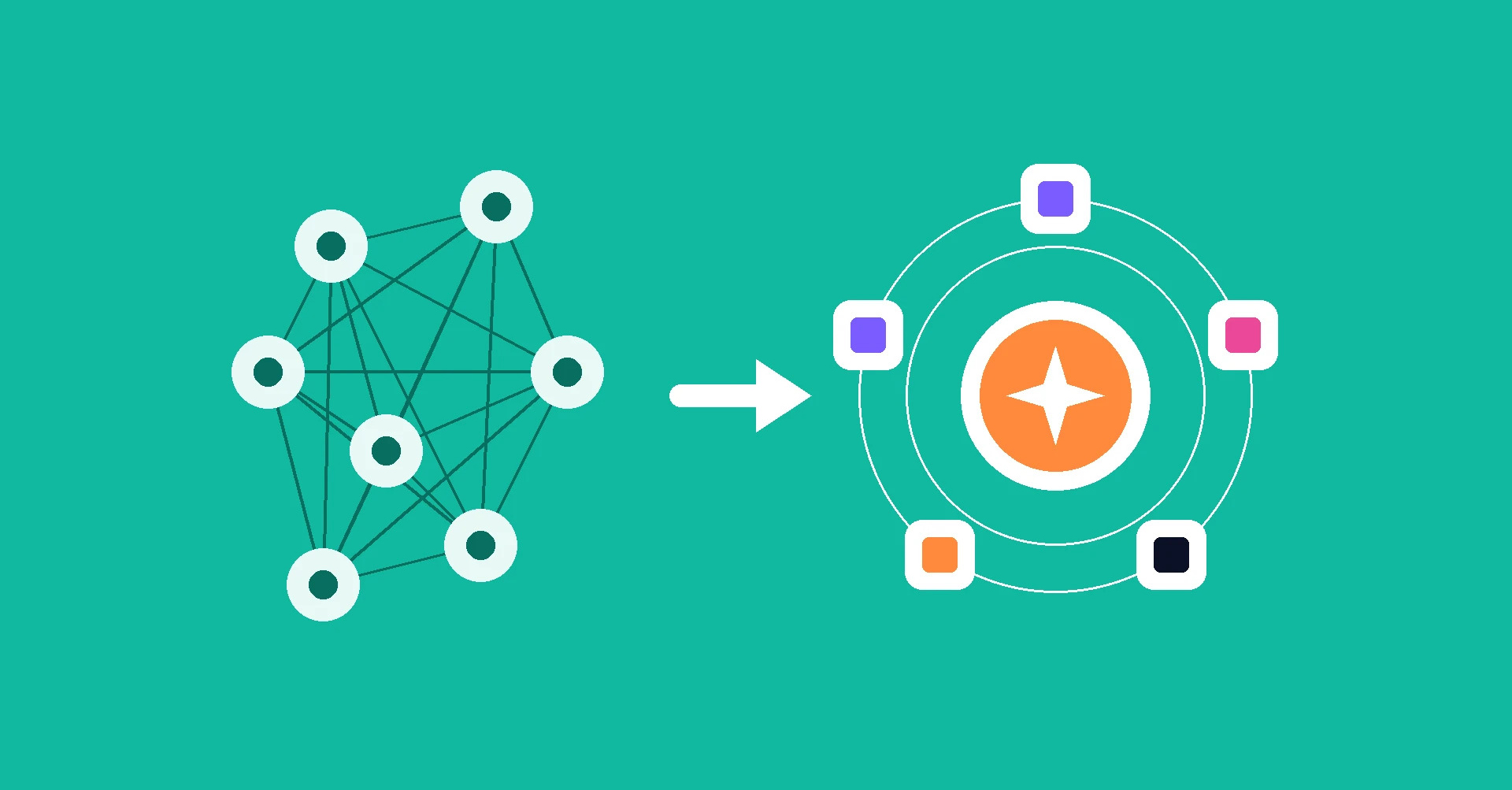
- In the single AI agent vs multi-agent debate, Anthropic now says one well-equipped agent often beats a team of agents. It is faster, cheaper and makes fewer mix-ups.
- The reason is simple: every handoff between agents loses information and adds waiting time. Newer models can plan, do and check work on their own.
- Multi-agent setups still win for big jobs that split into independent parts, like researching 50 companies at once.
- For you, this means simpler AI tools are not “weaker” tools. You probably don’t need an expensive agent swarm.
More AI agents isn’t always better
For the past year, “agent swarms” have been the hottest idea in AI. Instead of one AI, you set up a team: a manager agent hands work to a researcher agent, a writer agent, a checker agent, and so on. Startups pitch it, YouTube is full of it, and it sounds a lot like a real company.
Now one of the biggest AI labs is pushing back. In October 2026, Anthropic, the company behind Claude, published guidance saying that a single primary AI agent with on-demand context often outperforms multi-agent setups on quality, cost and speed. It even released a free migration kit on GitHub to help companies fold their agent teams back into one agent.
That’s a notable shift. In 2025, Anthropic itself showed a multi-agent research system beating a single agent by 90.2%. So what changed, and does it matter for you? Here is the plain-English version.
Single AI agent vs multi-agent, explained simply
Think of a small business that needs a website updated.
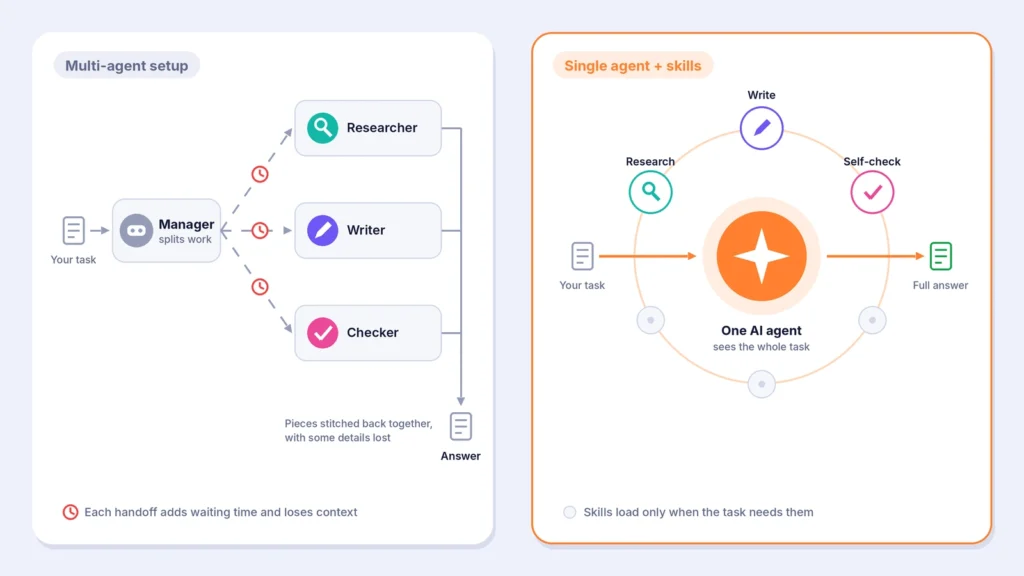
The multi-agent way is like hiring five freelancers. One takes the brief, passes notes to a designer, who passes files to a developer, who sends it to a tester. Each person only sees their part. Every handoff takes time, and details get lost along the way.
The single-agent way is like hiring one skilled generalist who keeps the whole project in their head. They pull in the right tool for each step, such as a design app or a code checker, and check their own work before handing it over.
| Single AI agent | Multi-agent setup | |
|---|---|---|
| How it works | One AI plans, does and checks the task | A manager AI splits work among specialist AIs |
| Context | Sees the whole task at once | Each agent sees only its piece |
| Speed | Faster, with no handoffs | Slower when agents wait on each other |
| Cost | Lower | Higher; Anthropic’s research system used about 15× more tokens than a normal chat |
| Consistency | One voice, one set of rules | Tone and rules can clash between agents |
| Best for | Most everyday tasks | Huge jobs that split into independent parts |
The key ingredient in Anthropic’s approach is skills. A skill is a packaged set of instructions and tools for one kind of job. The single agent loads a skill only when it needs it, so it stays focused instead of carrying everything at once.
Why one agent often wins
Anthropic and the teams it works with point to five problems that keep showing up in multi-agent setups.
- Information gets lost at every handoff. When agent A passes work to agent B, it sends a summary, not everything it knows. Small details drop out, and mistakes stack up down the chain.
- Handoffs add waiting time. Each agent has to start, read its brief and reply. In one comparison, a single-agent setup ran about twice as fast as the multi-agent version.
- Rules start to clash. Each agent gets its own instructions, and they drift apart over time. One customer-service system reportedly had 12 specialist sub-agents, which led to an inconsistent tone and slow replies.
- Teams copy the org chart, not the problem. Companies often build one agent per department because that is how they are organized, not because the task needs it.
- Today’s models can manage themselves. Older models needed a “manager” agent to keep them on track. Newer models can plan, carry out and review their own work in one go. Anthropic says it cut its own Claude Code system prompt by more than 80% for newer models.
Anthropic’s suggested recipe is simple: a short main prompt, four or five focused tools, and skills that load only when they are needed.
When multi-agent setups still make sense
This isn’t “multi-agent is dead.” Anthropic says teams “should not consolidate blindly”. Its own 2025 research system shows where several agents really help: a lead agent split a huge research task, such as finding every board member at every S&P 500 IT company, across parallel helpers. That setup beat a single agent by 90.2%.
Multiple agents are worth it when:
- The job is too big for one memory. If one agent’s context gets so full that its quality measurably drops, splitting the work helps.
- The parts are truly independent. Researching 50 companies at once is a good fit. Writing one essay is not.
- There are too many tools. Models struggle to choose once they have more than roughly 30 to 50 tool definitions.
- You want an independent checker. A separate “verifier” agent that only reviews the work is one of the simplest and most useful patterns.
The rule of thumb is to split work by how much information each part needs, not by job titles.
What this means for regular users
You don’t have to build AI agents for this news to affect you. It changes which tools are worth your time and money.
- Don’t pay extra for “agent swarms.” If an app’s main selling point is “10 AI agents working for you,” be skeptical. More agents usually means higher cost and slower results, not better ones. An evaluation by Vals found that going from 10 to 100 agents brought no measurable quality gains, only higher costs.
- Use one good assistant for most jobs. For writing, planning, coding help or email, one strong assistant with the right tools is usually enough. Our guide to AI agents for email and calendar shows how to set one up.
- Give it the full picture in one place. One agent works best when it has all the context. Paste the brief, the files and the goal into the same chat, instead of splitting the task across several bots.
- Use “research mode” for big research. Deep research features that send out several helpers in parallel are exactly where multiple agents earn their cost. Save them for big questions, not quick lookups.
- Expect simpler, faster products. As companies follow this advice, many AI apps should get quicker and more consistent behind the scenes.
- If you build no-code automations, start with one agent. In Zapier, n8n or Make, try one agent with a few tools first. Add a second agent only if you can measure that it helps.
FAQ
What is the difference between a single AI agent and a multi-agent system? A single agent is one AI that plans, does and checks a task itself, using tools as needed. A multi-agent system splits the task among several AIs, usually a manager plus specialist helpers.
Did Anthropic say multi-agent AI is bad? No. It said a single agent with on-demand skills often does better on quality, cost and speed for most tasks. Multiple agents still help for very large jobs that split into independent parts.
What are AI agent skills? Skills are packages of instructions and tools for a specific kind of job. The agent loads one only when the task needs it, which keeps it focused.
Are multi-agent systems more expensive? Usually, yes. Every extra agent reads and writes its own text. Anthropic’s own research system used about 15 times more tokens than a normal chat.
Should I use one AI assistant or several? For most daily work, use one strong assistant and give it all the context. Use research features with parallel helpers only for big research tasks.
One smart agent beats a crowded team
The single AI agent vs multi-agent debate is shifting fast. A year ago, more agents sounded smarter. Now the company that built one of the best-known multi-agent systems is telling businesses to simplify. For most tasks, one capable agent with the right skills is faster, cheaper and more consistent.
So the next time an app promises “a team of 20 AI agents,” ask a simple question: would one good agent do the job just as well?