
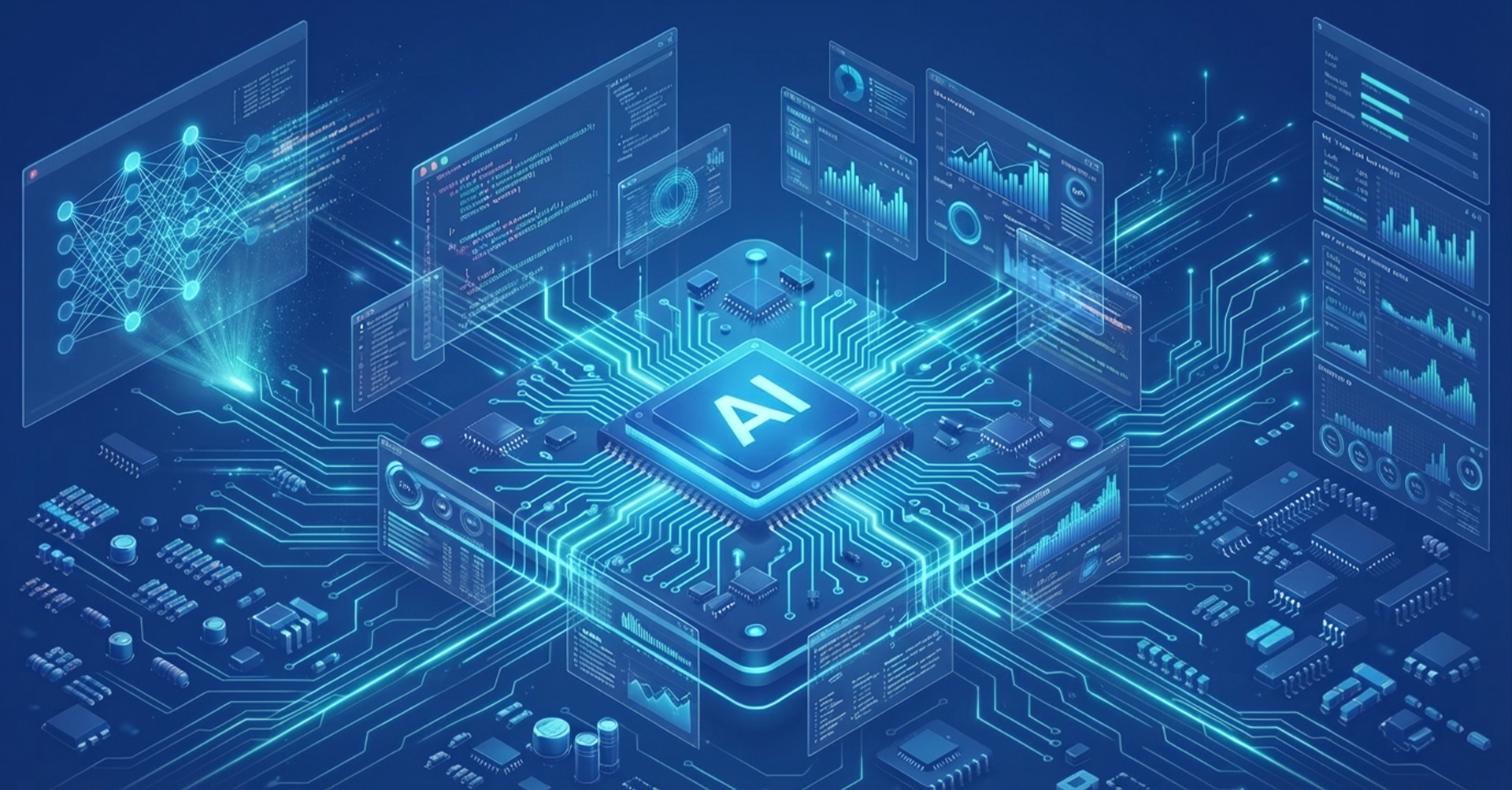
Artificial intelligence is no longer limited to understanding text or answering questions. Today’s AI can read documents, interpret images, analyse videos, understand speech, and even process business data—all at the same time. This new generation of technology, known as Multimodal AI, is changing how businesses automate operations, serve customers, and make decisions.
Unlike traditional AI models that specialise in a single type of data, multimodal AI combines multiple data sources to understand context more like a human. The result is smarter insights, better automation, and more accurate decision-making across industries.
From hospitals and factories to marketing teams and customer support centres, businesses are rapidly adopting multimodal AI to solve problems that single-mode AI simply cannot.
TL;DR
- Multimodal AI combines text, images, audio, video, and structured data to deliver more accurate insights than traditional AI.
- It helps businesses improve decision-making, automation, customer support, marketing, healthcare, manufacturing, and robotics.
- Unlike single-purpose AI models, multimodal AI understands context by analysing multiple data types simultaneously.
- Businesses benefit from better accuracy, richer insights, and more natural human-AI interactions.
- While powerful, organisations must address data integration, infrastructure, security, privacy, and governance challenges.
- As AI agents become more capable, multimodal AI is set to become a core technology for enterprise AI and intelligent automation in 2026 and beyond.
What Is Multimodal AI?
Multimodal AI is an artificial intelligence system capable of processing and understanding multiple types of data simultaneously, including text, images, audio, video, and structured data.
Instead of analysing each format separately, the model connects them to build a complete understanding of a situation.
Imagine a retailer preparing to launch a new product. Rather than analysing customer reviews alone, a multimodal AI model can evaluate product photos, social media posts, competitor videos, sales reports, and customer feedback together. This gives decision-makers a far richer view of customer preferences and market trends.
That’s the biggest difference between traditional AI and multimodal AI—it’s not just analysing more data; it’s understanding how different data types relate to one another.
Why Businesses Are Investing in Multimodal AI
Modern businesses generate enormous amounts of information every day.
Emails, customer chats, invoices, images, videos, phone calls, spreadsheets, reports, and sensor data all contain valuable insights. Traditionally, organisations needed separate AI tools for each type of information.
Multimodal AI removes those silos.
By combining multiple data sources into a single AI workflow, businesses can automate more complex tasks, improve accuracy, and make faster decisions.
Whether it’s identifying manufacturing defects from camera feeds, analysing customer sentiment from calls and emails, or helping doctors review medical scans alongside patient histories, multimodal AI delivers a more complete understanding of every scenario.
How Multimodal AI Works
Although the technology behind multimodal AI is highly advanced, its workflow follows a logical sequence.
First, the AI processes each type of information using specialised models.
- Large Language Models (LLMs) understand text and documents.
- Computer vision models interpret images.
- Speech recognition models analyse audio recordings.
- Video AI combines visual and audio information.
- Machine learning models process structured business data such as spreadsheets and databases.
The AI then combines these insights using fusion techniques, allowing relationships between different data types to emerge.
Finally, attention mechanisms prioritise the most relevant information before generating recommendations, predictions, or responses.
The result is an AI system capable of understanding business problems from multiple perspectives instead of relying on a single source of information.
Types of Multimodal AI Models
Not every multimodal model processes the same types of data. Most fall into three broad categories.
Vision-Language Models: These combine images with text and are commonly used for image captioning, document analysis, product descriptions, visual search, and accessibility tools.
Audio-Visual Models: These analyse both sound and video, making them ideal for media production, surveillance, speech recognition, video analytics, and content moderation.
Audio-Visual-Text Models: The most advanced multimodal systems combine text, images, speech, and video into a single AI model. They power modern AI assistants, enterprise copilots, customer support platforms, and autonomous AI agents capable of handling complex workflows.
Real-World Applications of Multimodal AI
One of the biggest reasons multimodal AI is gaining traction is its versatility.
- Healthcare: Doctors can combine MRI scans, X-rays, lab reports, electronic health records, and physician notes to make faster and more accurate diagnoses while creating personalised treatment plans.
- Customer Support: Modern AI assistants can understand screenshots, uploaded documents, voice messages, and previous conversations within a single interaction. This allows more customer issues to be resolved without escalating to a human agent.
- Marketing: Marketing teams are using multimodal AI to generate ad copy, analyse customer sentiment across social media, create promotional videos, and optimise campaigns using multiple data sources simultaneously.
- Manufacturing: Factories use multimodal AI to combine camera feeds, equipment sensors, production reports, and maintenance logs for quality control, predictive maintenance, and operational efficiency.
- Autonomous Vehicles: Self-driving vehicles continuously process information from cameras, radar, lidar, GPS, traffic signs, and weather conditions to make safe driving decisions in real time.
The Benefits of Multimodal AI
The biggest advantage of multimodal AI isn’t simply processing more information—it’s understanding context more effectively.
By combining different forms of data, businesses gain:
- More accurate insights
- Better decision-making
- Faster automation
- Improved customer experiences
- More natural AI interactions
- Reduced manual effort
- New opportunities for AI-powered products and services
Instead of relying on isolated datasets, organisations can make decisions based on a complete picture.
Challenges Businesses Should Consider
Despite its advantages, multimodal AI comes with its own challenges.
Integrating different data formats can be technically complex, especially when information is scattered across multiple systems.
Running multimodal models also requires significant computing resources, making cloud infrastructure an important consideration for many organisations.
Businesses must also prioritise privacy, security, and AI governance, particularly when handling sensitive customer or business information.
Finally, as AI systems become more sophisticated, understanding how they reach decisions becomes increasingly important. Strong monitoring, explainability, and governance practices are essential for maintaining trust and regulatory compliance.
The Future of Multimodal AI
Nearly every major AI company is investing heavily in multimodal technology.
Models from OpenAI, Google, Anthropic, Meta, and Microsoft are rapidly evolving beyond text-only interactions. At the same time, enterprise software vendors are integrating multimodal capabilities into CRM platforms, productivity tools, customer service applications, and business intelligence systems.
As AI agents become more autonomous, multimodal AI will become the foundation that enables them to understand complex business environments, interact naturally with people, and automate increasingly sophisticated workflows.
For businesses, adopting multimodal AI is no longer just about staying competitive it’s about preparing for the next generation of intelligent automation.
What’s Next for Multimodal AI?
Multimodal AI represents one of the biggest advancements in artificial intelligence since the rise of large language models.
By combining text, images, audio, video, and structured data into a single intelligent system, businesses can unlock deeper insights, automate complex workflows, and make faster, more informed decisions.
As organisations continue their AI transformation journey, multimodal AI will play a central role in shaping smarter products, better customer experiences, and more efficient business operations. Companies that begin exploring its capabilities today will be better positioned for the AI-driven future of tomorrow.
Related Buzz: We also covered [RAG vs MCP: Which One Should Your AI Agent Use?]