
TL;DR
- Free browser games let you play directly in a web browser without expensive downloads or installations.
- Gartic Phone offers chaotic multiplayer drawing, while Krunker.io delivers fast-paced FPS action.
- Die in the Dungeon Classic brings tactical dice-based combat to roguelike fans.
- A Dark Room and Kittens Game offer surprisingly deep survival, strategy, and resource management.
- The Archives of Trevosa and Type Help challenge players with mysteries, clues, and deduction.
- Ink & Brine and Hilda’s Familiars combine exploration, shop management, and unusual discoveries.
- Kingdom of Loathing, Tristram, and Progress Quest offer quirky RPG experiences, from pun-filled adventures to automated battles.
- Universal Paperclips transforms a simple business simulation into a thought-provoking experiment in AI optimization.
The most underrated gaming device might already be sitting on your desk: your browser.
Forget massive downloads, expensive gaming PCs, and launchers that need three updates before you can play. Some of the best free browser games run directly in a tab, ready to steal your afternoon without asking for a single rupee.
There are multiplayer drawing games, fast-paced shooters, strange detective mysteries, cat-powered civilizations, and idle games that somehow turn making paperclips into an existential crisis.
The best part? You can start playing without paying for a game or installing anything.
Here are the best free browser games to play in 2026, from quirky indie experiments to multiplayer chaos.
1. Gartic Phone
The drawing game that turns group chats into chaos
Gartic Phone combines the telephone game with drawing and guessing. Players begin with a sentence, illustrate someone else’s prompt, and pass their creations around for the next person to interpret.
By the end, the original idea can become almost unrecognizable.
The comedy comes from misunderstandings rather than competitive skill, making it a great choice for parties, remote hangouts, and online gaming sessions.
Best for: Groups of friends, party-game fans, and anyone who enjoys chaotic multiplayer fun.
2. Krunker.io
A fast-paced shooter that runs in your browser
If puzzles and idle games aren’t your thing, Krunker.io offers a very different experience.
This browser-based first-person shooter features fast movement, blocky visuals, and competitive multiplayer matches. Its lightweight presentation makes it accessible on many computers without the installation requirements of larger shooters.
The emphasis is on quick matches and responsive movement rather than elaborate storytelling or long campaigns.
It’s a straightforward way to jump into a multiplayer FPS when there’s no time to download a large game.
Best for: Fans of competitive shooters and quick online matches.
3. Die in the Dungeon Classic
A dungeon crawler where dice replace cards
Imagine Slay the Spire, except your strategy revolves around dice instead of cards.
In Die in the Dungeon Classic, you play as a frog warrior exploring a dangerous dungeon. Different dice represent attacks, defense, healing, and boosts, and positioning them on a grid determines how effectively you use them.
Every turn becomes a small puzzle. Should you prioritize damage, protect yourself, or set up a stronger move for later?
The game combines roguelike strategy with a distinctive dice-based combat system that rewards planning over button-mashing.
Best for: Roguelike fans who enjoy tactical decisions and replayable runs.
4. A Dark Room
A survival mystery that grows far beyond its opening screen
A Dark Room begins with almost nothing: a cold room, a fire, and a handful of simple actions.
As you progress, you gather resources, encounter new characters, expand a settlement, and gradually discover a much larger world. The game introduces its systems slowly, allowing curiosity to do much of the work.
Its text-driven presentation is part of the appeal. Rather than overwhelming you with maps and tutorials, it lets the experience reveal itself one decision at a time.
What begins as a minimal survival game eventually develops into something much more ambitious.
Best for: Fans of text adventures, incremental games, and slow-burn exploration.
5. The Archives of Trevosa
Solve a royal mystery by learning a fictional language
Most detective games give you clues. The Archives of Trevosa gives you an archive full of documents written in a language you don’t understand.
Your task is to investigate a fractured royal family, tracing generations of relationships, rivalries, exiles, and succession disputes. You search for keywords, study documents, identify unfamiliar words through context, and use those discoveries to uncover more information.
Each answer creates new questions, turning the investigation into a chain of small discoveries.
There are no traditional action sequences to distract you. Just your curiosity, a search bar, and a mystery that gradually becomes easier to understand.
Best for: Puzzle lovers, mystery fans, and anyone who enjoys decoding unfamiliar languages.
6. Type Help
A murder mystery hidden inside old computer files
Type Help turns an investigation into a text-based experience that feels like exploring someone else’s computer.
The case revolves around Galley House, a mansion associated with an apparently unsolvable series of murders. You examine recovered files and audio-log transcripts, using timestamps, locations, and conversations to reconstruct what happened.
The challenge isn’t simply finding a suspicious character. It’s connecting the details, figuring out who was present, and working out how the events fit together.
Its stripped-down presentation makes every new clue feel important.
Best for: Fans of detective games, forensic mysteries, and narrative puzzles.
7. Ink & Brine
Run a dive shop with something strange beneath the surface
In Ink & Brine, you inherit a dive shop from your grandmother and begin exploring the waters around a mysterious cove.
Diving is a balancing act. You have limited air, equipment to improve, and objects to recover before returning to the surface. You can collect items, photograph fish, sell your discoveries, and invest in better gear for deeper expeditions.
Naturally, the ocean holds more than ordinary marine life.
The game’s unsettling atmosphere draws on cosmic horror, turning what begins as a shop-management adventure into something much stranger.
Best for: Fans of exploration, management games, and eerie underwater mysteries.
Note: Ink & Brine is a demo, so the available experience may be limited.
8. Hilda’s Familiars
Run a magical shop where customers never explain themselves properly
Running a shop sounds easy until your customers start asking for objects described in the most confusing ways imaginable.
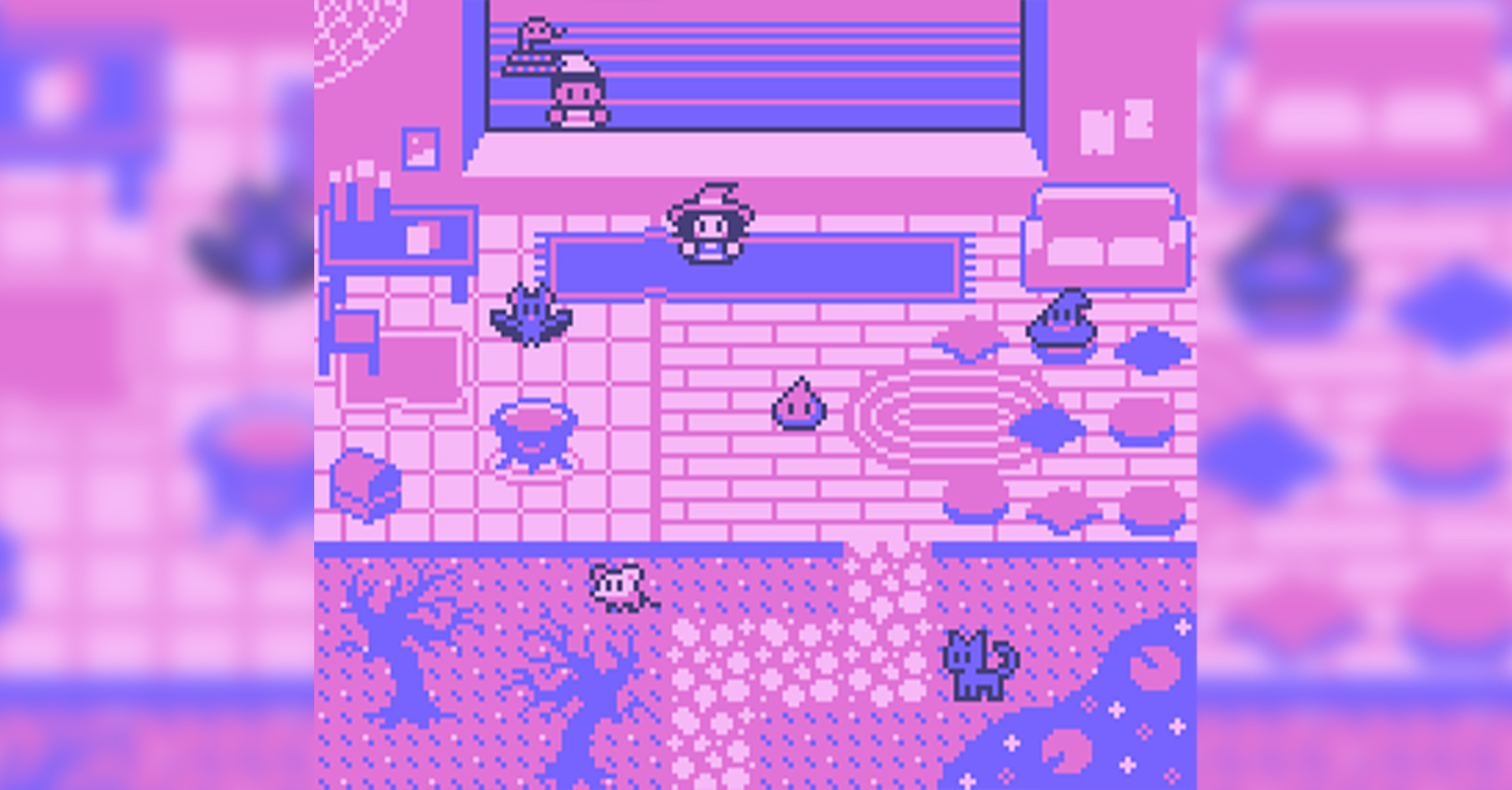
Hilda’s Familiars puts you in charge of a witch’s shop selling magical creatures and related items. Customers describe what they want, and you must inspect your shelves to find the best match.
The descriptions can be vague, unusual, or downright ridiculous. Since you can’t simply ask customers to clarify everything, the challenge is interpreting their requests correctly.
Make too many wrong choices, and customers will leave.
It’s a charming combination of observation, deduction, and shop management that rewards careful reading.
Best for: Fans of cozy games, magical settings, and light deduction puzzles.
9. Kingdom of Loathing
An MMO that takes its bad jokes very seriously
Kingdom of Loathing proves that a game doesn’t need impressive graphics to have personality.
This long-running browser RPG uses deliberately simple stick-figure artwork, turn-based combat, strange quests, and an enormous supply of puns.
Its character classes include absurd concepts such as the Sauceror and the Disco Bandit. Even its dungeons can turn familiar RPG conventions into elaborate jokes.
Beneath the comedy, there’s a substantial RPG with progression systems, equipment, quests, and multiplayer features.
The visual style is part of the appeal: everything looks ridiculous because the game knows exactly what it is.
Best for: RPG fans who appreciate satire, wordplay, and unconventional humor.
10. Tristram
Diablo-style adventures that mostly play themselves
Tristram takes inspiration from the dark fantasy atmosphere of the original Diablo and turns dungeon crawling into an auto-battler.
Recruit heroes, send them into dangerous catacombs, collect loot, and use the rewards to rebuild the town. Your party handles the fighting while you manage the bigger picture.
The fun comes from watching your plans unfold. Heroes might triumph against impossible odds or make questionable decisions that turn an ordinary expedition into comedy.
It’s a clever little experiment for anyone who enjoys RPG progression without needing to control every battle.
Best for: Diablo fans, idle RPG enthusiasts, and players who enjoy watching systems evolve.
11. Progress Quest
An RPG that plays itself
Most MMORPGs ask you to grind for experience, collect equipment, and repeat activities until your character becomes powerful.
Progress Quest removes the inconvenient part: actually playing.
Create a character and watch the game automatically explore, fight monsters, collect loot, and gain levels. Equipment and abilities appear as your character progresses, often with wonderfully absurd names.
It’s a parody of the repetitive progression systems found in traditional online RPGs, taken to their logical extreme.
There’s something oddly entertaining about checking back to see what your character has accomplished without you doing anything at all.
Best for: Idle-game fans and anyone who enjoys gaming satire.
12. Kittens Game
Build a civilization powered by catnip
Kittens Game begins with a tiny settlement and a single kitten. Before long, you’re managing resources, expanding your population, researching technologies, and building a civilization.
Catnip is only the beginning. As the game develops, you’ll manage wood, minerals, science, faith, and increasingly unusual resources while unlocking more complex systems.
Eventually, your feline society can progress toward space exploration.
The interface looks like a plain collection of text and numbers, but the underlying strategy becomes surprisingly deep. Every resource competes for your attention, and decisions made early can influence how efficiently your civilization develops.
It’s the kind of game that makes checking one more resource turn into another hour of optimization.
Best for: Strategy enthusiasts, incremental-game fans, and people who believe every civilization needs more cats.
13. Universal Paperclips
Start a paperclip business. Accidentally rethink the universe.
At first, Universal Paperclips barely looks like a game.
You manufacture paperclips, sell them, buy upgrades, and expand production. Then you begin automating decisions, optimizing resources, and pursuing increasingly ambitious goals.
What starts as a tiny business simulation gradually becomes a much larger experiment in optimization and artificial intelligence.
The central idea is deceptively simple: what happens when a system relentlessly pursues one objective without understanding the consequences?
Its minimalist interface hides a surprisingly thought-provoking experience about incentives, automation, and the dangers of optimizing a single goal too aggressively.
Best for: Idle-game fans, strategy enthusiasts, and anyone interested in AI and optimization.
Related Buzz: We also covered [Best Blockchain Games to Play in 2026]