
Web3 Ownership Doesn’t Start Where You Think It Does
WEB3 WORLD
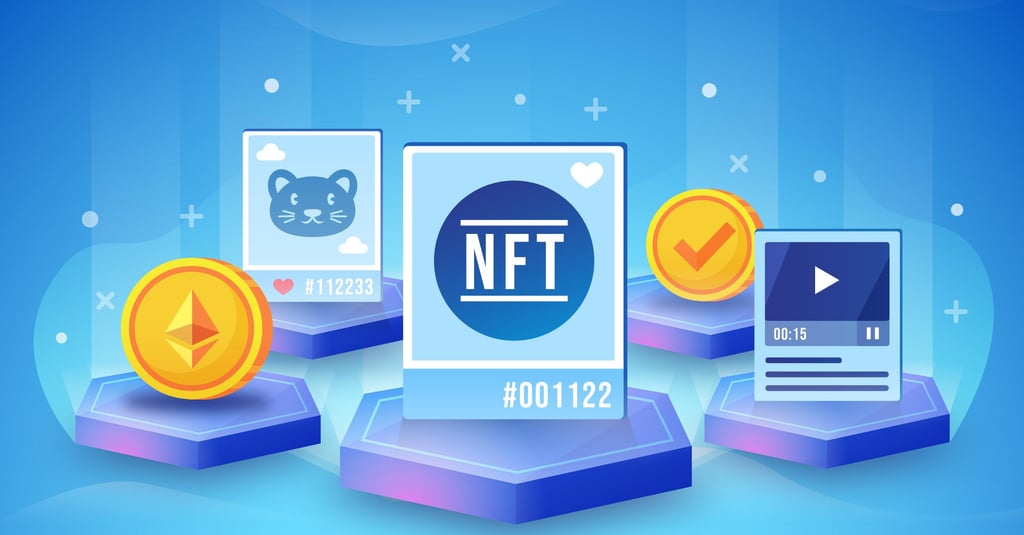
For most people, Web3 doesn’t begin with decentralization, wallets, or smart contracts. It begins with something far more familiar: a login screen.
You sign up. You verify your email. You click “buy.” And just like that, you’re inside Web3 — without fully realizing it.
Crypto exchanges and NFTs have quietly become the front door to digital ownership, even for people who don’t care about blockchains or decentralization. And that shift matters more than most people think.
How Web3 Ownership Actually Starts Today
In theory, Web3 is about self-custody, decentralization, and owning your digital assets directly. In practice, most people’s first Web3 experience happens on a centralized crypto exchange.
Exchanges feel safe. Familiar. Bank-like. They abstract away the scary parts private keys, gas fees, and irreversible mistakes. For beginners, this isn’t a flaw. It’s the only reason adoption happens at all.
Web3 ideology might start with wallets. Real users start with convenience.
Why NFTs Changed the Entry Point
Before NFTs, crypto ownership felt abstract. Numbers in a wallet. Tokens with no visual identity. NFTs changed that by attaching ownership to something people could see, recognize, and emotionally connect with.
An NFT wasn’t just an asset. It was:
A profile picture
A collectible
A membership pass
A signal of identity
Buying an NFT on an exchange or marketplace felt less like finance and more like culture. That shift pulled creators, artists, gamers, and communities into Web3 many of whom never cared about crypto before.
Exchanges as the Training Wheels of Web3
Purists often criticize exchanges for being centralized. And they’re not wrong. When your assets live on an exchange, you don’t truly own the keys.
But here’s the uncomfortable truth: most people need training wheels before they ride freely.
Exchanges lower the friction. They teach users how crypto works balances, transfers, volatility without overwhelming them. For many, exchanges are a temporary home, not the destination.
Ownership starts with access. Control comes later.
NFTs Made Ownership Feel Human
NFTs did something subtle but powerful. They made ownership emotional. Instead of asking, “Do you own this token?” the question became, “Is this yours?” That psychological shift matters.
NFTs blurred the line between digital goods and personal identity. Suddenly, owning something online didn’t feel imaginary. It felt real even if the technology underneath was complex.
This is why NFTs became gateways, not endpoints.
The Tension Between Convenience and Control
Here’s where things get interesting. Crypto exchanges and NFT platforms sit in an awkward middle ground. They promise ownership while still controlling parts of the experience. They make Web3 usable, but not fully decentralized.
And that’s not a failure. It’s a transition phase. As users grow more comfortable, many start asking harder questions:
Where are my assets actually stored?
Who controls access?
What happens if this platform disappears?
That curiosity is often the moment people move from platforms to wallets.
From Platforms to Protocols
What we’re witnessing isn’t the death of exchanges or NFTs it’s their evolution.
Exchanges introduce people to Web3. Wallets deepen the experience. Protocols enable true ownership. Each layer builds on the previous one.
NFTs aren’t just collectibles anymore. They’re keys, identities, and access points. Exchanges aren’t just trading platforms. They’re onboarding systems for a new digital economy.
Ownership in Web3 is becoming a journey, not a switch.
Why This Matters for the Future of Web3
Mass adoption won’t happen through ideology alone. It happens through usability.
Crypto exchanges and NFTs made Web3 approachable. They gave people a reason to care before they understood the tech. And once people care, learning follows.
Web3 ownership won’t start with decentralization slogans. It will start with a simple action: this is mine.
TL;DR
Crypto exchanges and NFTs are the gateway drug to Web3 ownership.
They trade purity for usability and that’s why they work. Real ownership doesn’t begin with perfect decentralization. It begins with access, familiarity, and a reason to care.
Web3 doesn’t start where purists want it to. It starts where people are.
Where business meets innovation, and trends turn into opportunities. Stay sharp, stay ahead, and catch the buzz that’s shaping the future.