Replacing Doomscrolling Doesn’t Require Quitting Screens
BUILDERS

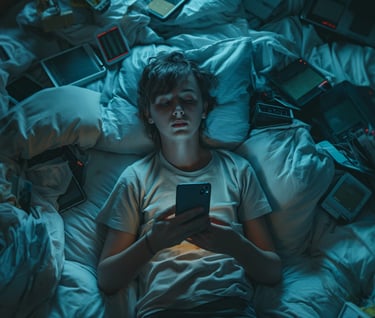
Doomscrolling isn’t just a habit. It’s a pattern.
A reflex built over time, where reaching for a phone becomes automatic. A moment of pause turns into a scroll. A scroll turns into an hour. And often, there’s no clear reason why it started.
For many, the instinctive solution is to reduce screen time entirely. But in a world where work, communication, and entertainment all exist on screens, that approach rarely works.
A more practical shift is emerging. Not removing screens but replacing them.
TL;DR
Doomscrolling isn’t just about how much time is spent on screens. It’s about how that time is structured. Replacing fast, infinite content with slower, self-contained digital experiences can reduce the habit without forcing discipline.
The solution isn’t to quit screens. It’s to use them differently.
Not All Screen Time Is the Same
There’s an assumption that all digital engagement affects us in the same way.
But the experience of consuming endless social feeds is fundamentally different from engaging with something slower and self-contained.
Some digital environments are designed for retention. They continuously update, pull attention forward, and encourage repetition. Others are designed for completion. They offer a beginning, a middle, and an end. They allow pauses without consequence.
The difference isn’t the screen. It’s the structure behind it.
The Power of Substitution
Breaking a habit is difficult because it creates a vacuum. Simply removing a behavior often leads to replacing it with something similar, usually unconsciously.
But intentional substitution works differently. Replacing passive scrolling with a more focused, contained activity creates a shift without requiring discipline. The need to fill idle moments remains, but the experience changes.
Instead of constant updates, there is progression. Instead of comparison, there is immersion. Instead of endless input, there is a defined loop.
Why Slower Experiences Work
Modern digital platforms are optimized for engagement. They reduce friction, increase stimulation, and remove stopping cues. The result is an experience that feels continuous, even when it offers little sense of completion.
Slower, more structured digital activities create a different rhythm. They introduce natural breaks. They allow attention to settle. They give the mind space between actions. That space is important. It is where focus returns.
Attention Begins to Reset
When fast, reactive consumption is replaced with something more deliberate, subtle changes begin to happen. Idle moments feel less urgent. The impulse to check a device weakens. Focus becomes easier to sustain.
The change is gradual, but noticeable. Not because effort is applied, but because the environment no longer demands constant engagement. Over time, the reliance on continuous input begins to reduce.
A Different Way to Engage With Technology
This shift is not about rejecting technology. It is about redefining the relationship with it. Digital tools can either demand attention or support it. They can fragment focus or structure it.
Choosing experiences that are self-paced, finite, and less intrusive creates a more balanced interaction. The goal is not disconnection. It is control.
The Bigger Shift
Doomscrolling thrives on immediacy and excess. Breaking it does not require extreme action. It requires a change in pattern. Replacing one form of digital engagement with another — one that is slower, more intentional, and less demanding can create that shift naturally. The behavior doesn’t disappear overnight. But it loses its hold.
Where business meets innovation, and trends turn into opportunities. Stay sharp, stay ahead, and catch the buzz that’s shaping the future.