
Pokémon Pokopia Turns “Catch ’Em All” Into “Build It All”
BUILDERS
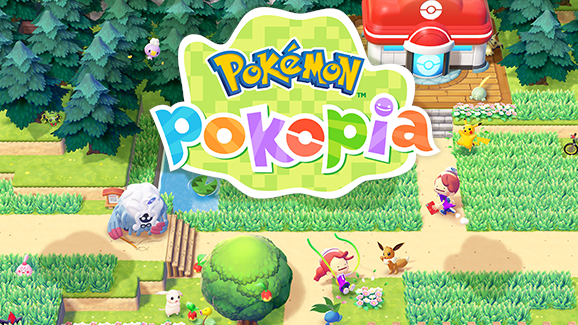
Pokémon Pokopia doesn’t start like a typical Pokémon adventure. There are no badges. No rival waiting to challenge you. No dramatic professor handing you a starter and a life goal.
Instead, there’s silence. A world where humans and Pokémon have mysteriously disappeared, leaving behind something closer to a blank canvas than a living region.
And you?
You’re a Ditto trying very hard to pass as human. Which, honestly, feels like a metaphor the game doesn’t even need to explain.
TL;DR
Pokémon Pokopia replaces battles with rebuilding. You don’t catch Pokémon, you create spaces where they choose to return. It’s a slow, thoughtful loop of crafting, exploration, and environmental restoration.
And for once, the goal isn’t to be the best trainer. It’s to be a decent caretaker.
A World That Needs Rebuilding, Not Battling
The only companion you start with is Professor Tangrowth, which already tells you this isn’t a normal situation. Together, you don’t set out to fight or compete. You rebuild. The world is made of broken, empty spaces that slowly become something more alive as you work through them.
You gather materials, shape terrain, and create habitats using whatever you can find: shrubs, trees, scraps, and a bit of optimism. Pokémon don’t just “appear” randomly anymore.
They return when the world makes sense for them again. Which is a surprisingly emotional upgrade from “throw ball, hope for the best.”
The Core Loop: Build, Attract, Repeat
At its heart, Pokopia is a loop of restoration. You shape land, build homes, and design habitats. In response, Pokémon begin to re-enter the world. Each one brings something new: a skill, a material, or a way to further reshape the environment. It’s less about collection and more about cooperation.
A fire-type doesn’t just exist in your town; it helps you process materials. A grass-type doesn’t just sit there; it helps your environment grow. A water-type might literally ask you to adjust humidity, like it’s giving you a feedback form for real estate.
Everything feeds back into everything else. Slowly. Intentionally. Almost too efficiently to feel accidental.
Yes, You Can Build a Bridge Because You’re Impatient (And That’s Allowed)
The world is fully block-based, which means if something is in your way, the solution is simple: Remove it. Or rebuild around it. Can’t cross a river? Build a bridge. Need a path? Excavate one. Want your town to look like a cozy village instead of a chaotic accident?
That’s also on you. It’s very much in the spirit of games like Minecraft, except here, every structure feels tied directly to whether Pokémon will actually want to live there.
This adds a layer of consequence to your decorating habits.
The Slow Burn Problem (And the Honest Trade-Off)
Pokopia isn’t fast. Some larger projects take real time to complete, and the game even continues building while you’re away. It’s a nice idea until you realize patience is now part of the gameplay loop. Progress can feel like it’s moving in real-world time, not game time.
So yes, it’s rewarding. But also yes, occasionally it tests your relationship with waiting.
Pokémon Finally Feel Like… Characters
What makes Pokopia stand out isn’t just building mechanics. It’s how alive the Pokémon feel in it. They don’t just exist as collectible units. They interact with you. They thank you. They give you items. They actually talk, not just through nostalgic sound effects, but through actual communication that makes them feel present in the world.
And instead of the usual “cry” sounds we’ve heard for decades, this world leans toward a more expressive interpretation of Pokémon interaction closer to personality than noise.
After 30 years of digital chirps, it’s a shift that feels oddly overdue.
A Bigger Roster, A Smaller World (In a Good Way)
Pokopia doesn’t limit itself to just a few familiar faces. There are over 100 Pokémon, including newer additions alongside classics from Kanto and beyond. Some even show up as unexpected variations like Peakychu or Mosslax, fitting neatly into the game’s altered ecosystem. Each one has preferences. Some want water-rich environments.
Some prefer structured homes. Some want exercise space like they’re training for something we’re not fully informed about. And when you match the right Pokémon with the right environment, the world quietly clicks into place.
Not a Pokémon Game About Winning — But Belonging
Most Pokémon games are about becoming stronger than the world around you. Pokopia is about making the world work at all. It shifts the focus from dominance to design, from battles to balance, from capturing to coexisting.
And strangely enough, that’s where it becomes most Pokémon-like, just not in the way we’re used to.
Where business meets innovation, and trends turn into opportunities. Stay sharp, stay ahead, and catch the buzz that’s shaping the future.