
The internet’s favorite comeback machine is trying once again.
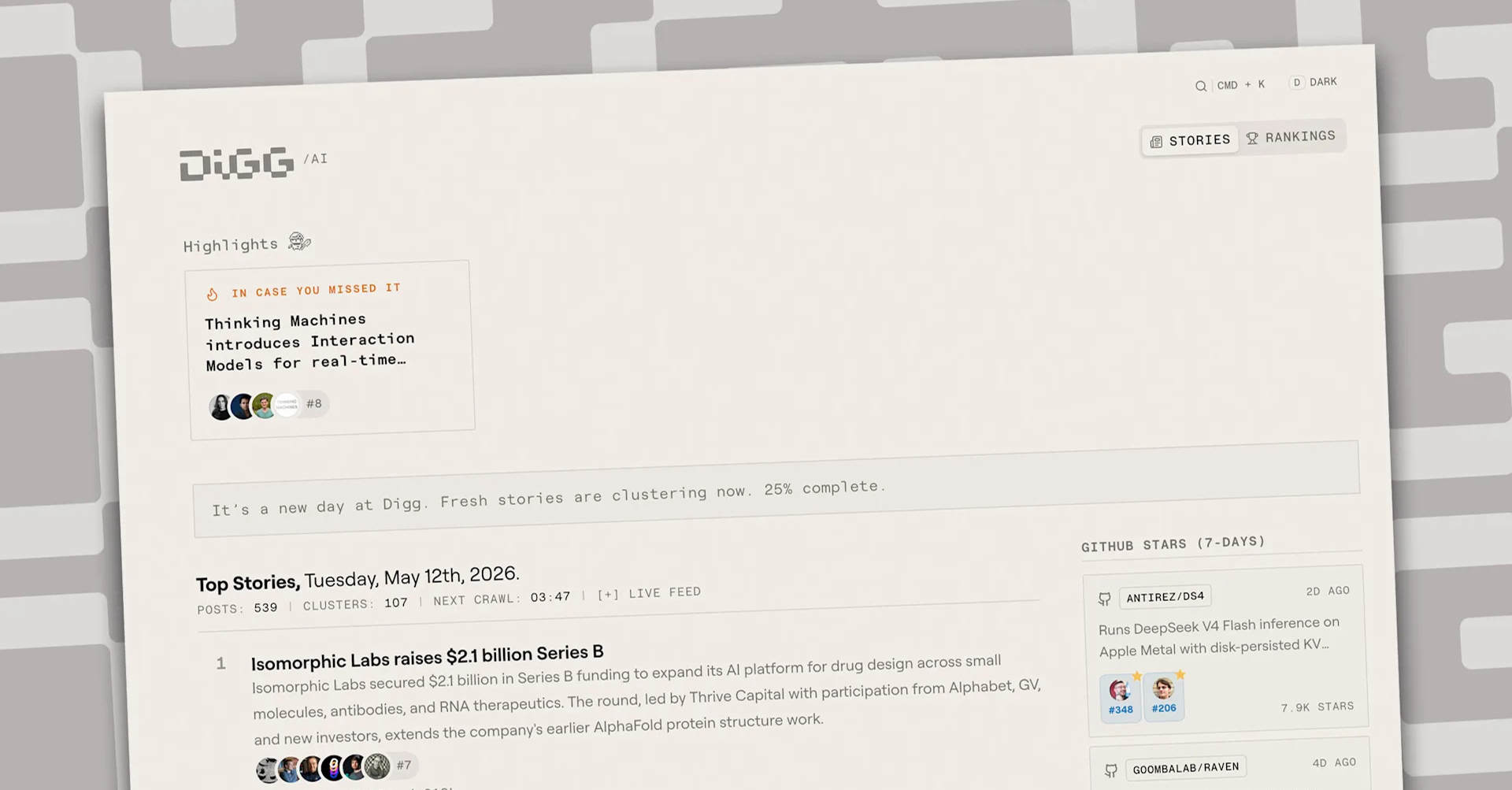
After shutting down its Reddit-style relaunch just months after launch, Kevin Rose’s Digg has returned with a completely different direction, one focused on ranking and tracking AI news instead of rebuilding online communities.
According to reports from TechCrunch and Fast Company, the new Digg is positioning itself as an AI-powered signal detection platform that monitors influential voices and conversations happening across X.
Instead of trying to compete directly with platforms like Reddit again, Digg now wants to answer a different question:
What actually matters on the internet right now?
TL;DR
- Digg has relaunched again, this time as an AI news aggregator.
- The platform tracks influential AI voices and conversations on X.
- It uses sentiment analysis and engagement tracking to rank important stories.
- Digg abandoned its earlier Reddit-style reboot after bot and spam issues.
- The new strategy focuses on surfacing “signal over noise” in AI news.
- If successful, Digg plans to expand beyond AI into other categories.
From Reddit Clone to AI Signal Tracker
Digg’s earlier 2026 reboot attempted to revive the social voting mechanics that once made the platform one of the internet’s most influential destinations. But the effort quickly collapsed after the platform was overwhelmed by bots, spam activity, and automated AI agents.
The company admitted it underestimated:
- the scale of bot traffic,
- the loyalty users still had toward competing communities,
- and how difficult it would be to rebuild engagement from scratch.
Now, Digg is abandoning the idea of becoming “another Reddit” and instead leaning into aggregation, analysis, and trend detection.
What the New Digg Actually Does
The redesigned Digg currently focuses entirely on AI news.
The platform tracks conversations from influential AI figures across X, including people like:
- Sam Altman
- Elon Musk
- Andrej Karpathy
- Geoffrey Hinton
Digg says it monitors around 1,000 influential voices in AI to determine which stories are gaining meaningful traction.
The platform then uses:
- sentiment analysis,
- engagement tracking,
- clustering,
- and signal detection
to rank stories based on importance and momentum instead of simply showing chronological news feeds.
The homepage currently highlights:
- most viewed stories,
- fastest-rising discussions,
- trending topics,
- and “in case you missed it” stories.
Digg’s Bigger Bet: AI News Has Become Too Noisy
Digg’s core thesis is simple:
AI moves faster than traditional news platforms can organize.
Research papers, product launches, viral threads, and hot takes now spread across the internet in real time, especially on X. Digg believes users increasingly need tools that separate meaningful signals from internet noise.
That makes this less of a classic social platform and more of an AI intelligence dashboard.
In many ways, the new Digg resembles:
- a real-time AI trend tracker,
- a social sentiment analyzer,
- and a lightweight media intelligence platform combined together.
Why This Relaunch Feels Different
Unlike the previous reboot, Digg is no longer trying to rebuild internet communities from zero.
Instead, it is leveraging conversations already happening elsewhere and organizing them into digestible insights.
That shift matters.
Building a social platform in 2026 is incredibly difficult. Competing against entrenched ecosystems like Reddit, X, and Threads requires network effects that are nearly impossible to recreate overnight.
But becoming an intelligence layer on top of those platforms is a far more realistic opportunity.
The Real Opportunity Might Be Publishers
One interesting angle behind Digg’s return is its potential impact on publishers.
As traffic from traditional search continues to decline due to changing algorithms and AI-generated summaries, publishers are increasingly looking for new discovery channels.
If Digg successfully becomes a destination where people discover emerging stories before they hit mainstream feeds, it could evolve into a meaningful traffic source for media companies and independent writers.
Ironically, Digg may find relevance again not by rebuilding old internet behaviors, but by helping people navigate the chaos of AI-era information overload.