
AI Agents vs Chatbots: What’s the Difference (And Why It Matters Now)
AI NOW

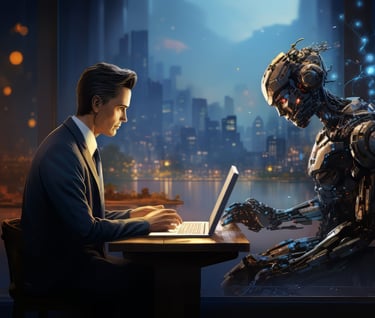
You’ve chatted with AI. You’ve asked it questions. You’ve copy-pasted answers..
But now something new is happening.
AI isn’t just replying anymore it’s doing things on its own. That’s the difference between chatbots and AI agents. And it matters more than people realize. Let’s break it down, without the buzzwords.
First: What Is a Chatbot, Really?
A chatbot is reactive. You ask a question. It answers. Conversation ends.
Even advanced chatbots like ChatGPT or customer support bots are still mostly prompt → response machines. They wait for instructions. They don’t plan. They don’t act unless you ask.
Think of a chatbot like a smart Google search with conversation skills.
Helpful? Yes. Autonomous? Not even close.
So What’s an AI Agent Then?
An AI agent doesn’t just respond it operates.
You give it a goal, not a question.
“Launch a landing page.” “Find leads and email them.” “Analyze this data and suggest next steps.”
The agent then:
Breaks the goal into tasks
Decides what to do first
Uses tools (browser, APIs, apps)
Checks results
Adjusts and continues
No constant prompting required. That’s a huge shift.
The Key Difference- Chatbots talk. AI agents act.
Chatbots help you think.
Agents help you execute.
Why This Difference Matters Right Now
Because software is changing. We’re moving away from:
Clicking buttons
Switching apps
Managing workflows
And moving toward:
Describing intent
Letting systems figure out the steps
Getting results, not interfaces
AI agents fit this future. Chatbots don’t — at least not on their own.
Real Examples You’re Already Seeing
Customer support agents that resolve tickets end-to-end. AI coding agents that build features, not just suggest code. Sales agents that research, reach out, and follow up. Personal assistants that schedule, summarize, and remind.
These aren’t chatbots with better prompts. They’re goal-driven systems.
The Opinion Part (Because It Needs to Be Said)
Most companies saying “we use AI” are still stuck at the chatbot stage. They’ve automated replies — not outcomes.
The real advantage isn’t having AI that sounds smart. It’s having AI that reduces human effort. That’s why AI agents will quietly replace a lot of software we currently use not because they’re flashy, but because they remove friction.
Are Chatbots Dead Then?
No. Chatbots are great for:
Q&A
Learning
Exploration
Conversations
But they’re not the future of automation. Think of chatbots as the interface and AI agents as the engine. One talks. The other drives.
Why Builders and Businesses Should Care.
If you’re building products, teams, or workflows in 2025 and beyond, this shift matters. The winners won’t be:
The most “AI-powered”
The most conversational
They’ll be the ones that:
Turn intent into action
Reduce steps
Remove complexity
And that’s exactly what AI agents are built for.
TL;Think
Chatbots answer questions. AI agents get things done. One makes software friendlier.
The other makes it disappear. And the moment software stops demanding attention that’s when it actually becomes useful.
Where business meets innovation, and trends turn into opportunities. Stay sharp, stay ahead, and catch the buzz that’s shaping the future.